
Call: 07971189211
 Send Inquiry
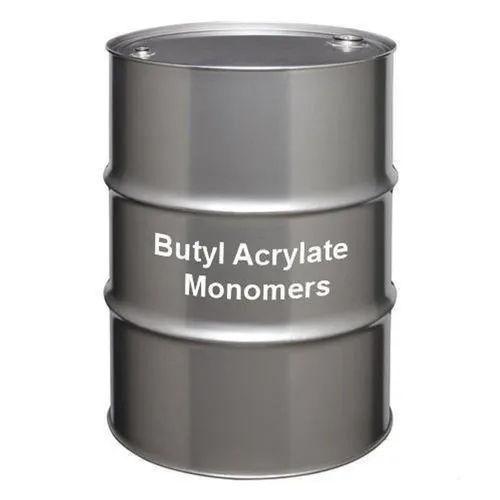
Butyl Acrylate Monomer
110 INR/Kilograms
Product Details:
- Solubility Slightly soluble in water; soluble in organic solvents
- Product Type Butyl Acrylate Monomer
- Ph Level Not applicable (not aqueous)
- Molecular Weight 128.17 g/mol
- CAS No 141-32-2
- Application Industrial
- Shape Cylindrical drum (for packaging)
- Click to View more
X
Butyl Acrylate Monomer Price And Quantity
- 110 INR/Kilograms
- 200 Kilograms
Butyl Acrylate Monomer Product Specifications
- Room Temperature
- Clear, colorless liquid
- C7H12O2
- -64C
- 0.895 Gram per cubic centimeter(g/cm3)
- Toxic by inhalation, skin contact and ingestion
- Pungent, acrid odor
- CH2=CHCOOC4H9
- 1.418
- Butyl Acrylate (C7H12O2)
- 2916 12 00
- Industrial / Technical
- Liquid
- Cylindrical drum (for packaging)
- Slightly soluble in water; soluble in organic solvents
- Not applicable (not aqueous)
- Butyl Acrylate Monomer
- 128.17 g/mol
- 141-32-2
- Industrial
- 12 months in original container
- For industrial manufacturing of various acrylic polymers and copolymers
- Colorless, volatile, flammable liquid with a strong, characteristic odor; polymerizes easily on exposure to heat, light or peroxides
- 205-480-7
- >99%
- 5.3 mmHg at 20C
- 39C (closed cup)
- UN No. 2348, Class 3 (flammable liquid)
- Harmful to aquatic life; avoid release into the environment
- 295C
- 145C
- Strong oxidizers, acids, bases, peroxides, and polymerizing initiators
- 0.7 mPa.s at 20C
- Contains inhibitor (typically MEHQ) to prevent polymerization
- Galvanized steel drums, ISO tanks, IBCs
Butyl Acrylate Monomer Trade Information
- Cash in Advance (CID)
- 5000 Kilograms Per Month
- 3 Days
- All India
Product Description
Butyl Acrylate Monomer is a colorless, volatile liquid organic compound that is used as a monomer in the production of polymers. It has the chemical formula C7H12O2. It is used in the production of coatings, such as paints and inks, where it imparts properties such as water resistance, durability, and UV stability. Butyl Acrylate Monomer is an important raw material in the polymer industry and is used in many applications due to its ability to form strong chemical bonds with a variety of materials.
Specification
| Boiling point | 148 deg C |
| CAS Number | 141-32-2 |
| Density | 0.89 g/mL |
| Formula | C7H12O2 |
| Molar mass | 128.17 g/mol |
| Packing Size | 210 Kg |
| Packing Type | Drum |
| Physical State | Liquid |
| Grade Standard | Reagent Grade |
| Usage | Industrial |
High Purity & Industrial Application
Our Butyl Acrylate Monomer is available in >99% purity, ideal for manufacturing acrylic polymers and copolymers in various industries. Its efficacy in providing flexibility, durability, and weather resistance makes it indispensable in paints, adhesives, coatings, and sealants. Supplied in secure packaging, this monomer ensures consistent performance and safety during industrial use.
Safe Storage & Packaging
To maintain stability and prevent hazardous polymerization, Butyl Acrylate is shipped with an inhibitor (often MEHQ) in robust galvanized steel drums, ISO tanks, or IBCs. Store at room temperature, away from direct sunlight and incompatible substances such as strong oxidizers, acids, peroxides, and polymerizing initiators, to guarantee shelf life and minimize environmental risks.
Environmental and Handling Precautions
Due to its toxicity and harmful effects on aquatic life, care must be taken to avoid environmental release of Butyl Acrylate Monomer. Always use protective equipment during handling and ensure proper ventilation. Adhere strictly to regulatory guidelines for storage, transport, and disposal to protect people and ecosystems.
FAQ's of Butyl Acrylate Monomer:
Q: How should Butyl Acrylate Monomer be stored to preserve its stability?
A: Butyl Acrylate Monomer should be stored in its original, tightly sealed galvanized steel drums, ISO tanks, or IBCs at room temperature, away from sources of heat, light, and incompatible materials such as strong oxidizers, acids, bases, peroxides, and polymerization initiators. The presence of an inhibitor (typically MEHQ) helps prevent unwanted polymerization.Q: What are the primary industrial uses of Butyl Acrylate Monomer?
A: Butyl Acrylate Monomer is mainly used in the industrial production of acrylic polymers and copolymers, which find application in paints, coatings, adhesives, sealants, and various plastic products. Its properties provide flexibility, weather resistance, and durability to end products.Q: When should Butyl Acrylate Monomer be handled with extra caution?
A: Extra caution is required when handling Butyl Acrylate Monomer due to its high flammability (flash point 39C), volatility, and toxic nature. Employ proper protective equipment at all times and avoid any sources of ignition or incompatible chemicals during processing, transfer, or disposal.Q: Where can Butyl Acrylate Monomer be exported or supplied from?
A: As an exporter, manufacturer, supplier, and trader based in India, Butyl Acrylate Monomer is available internationally, typically shipped in cylindrical drums, ISO tanks, or IBCs to industrial clients worldwide under strict compliance with UN hazard and shipping regulations.Q: What are the steps involved in the safe handling and disposal of Butyl Acrylate Monomer?
A: Safe handling includes using appropriate PPE, working in well-ventilated areas, and strictly avoiding skin contact or inhalation. For disposal, follow local hazardous waste regulations; never release into the environment, especially water sources, due to its toxicity to aquatic life.Q: How does the use of an inhibitor benefit the storage of Butyl Acrylate Monomer?
A: The addition of an inhibitor, such as MEHQ, prevents premature polymerization of Butyl Acrylate Monomer during storage and transport, thereby ensuring its chemical stability and prolonging its shelf life up to 12 months in its original container.Tell us about your requirement

Price:
Quantity
Select Unit
- 50
- 100
- 200
- 250
- 500
- 1000+
Additional detail
Mobile number
Email


Contact Details
Mine Chem India
GST : 27AAAFM2273P1ZY
- 308, Adamjinarsi Natha Street, Masjid, Katha Bazar,Mumbai - 400009, Maharashtra, India
- Phone :07971189211

 Send Inquiry

Developed and Managed by Infocom Network Private Limited.
